

Kitchen Faucet Finishes and Materials Compared
Choose a kitchen faucet finish by deciding which changes you could live with. Would you welcome a brass handle that grows brighter where you touch it? Would dried drops bother you on a dark spout? Does a replacement spray head have to match the faucet already at your sink? Those are different buying decisions. The color on the box answers only part of each. If you are evaluating an installed faucet that leaks below the counter, moves at its mounting or has sharp, loose pieces, stop using it and have the defect assessed before handling the finish.
Quick answers
- For a predictable appearance, look for a named finish with written care and coverage. Plated chrome, a powder coated color and exposed brass can all sit on a brass body. They age differently.
- For less visible handling, start with the manufacturer's specific spot resistant option. Delta lists SpotShield Stainless separately from its other stainless colors on the Leland. Compare the actual sample with your sink.
- For a deliberately changing surface, look for an explicitly living finish. Waterstone includes Unlacquered Polished Brass in that group. The words bronze, antique or brushed gold on their own promise no particular kind of aging.
- For drinking water, identify the complete faucet and its certification. A material named for the spout or a finish applied to a handle cannot describe every part that touches the water.
What part of the faucet does the material name describe?
Picture the faucet from the side while someone fills a pot. You see the outside of the arch, the lever and the underside of the spray head. The water has come through supply lines, a valve and a passage to the outlet. On a pull down faucet it also travels through a hose inside the spout. A manufacturer can use different materials for the visible skin, the body beneath it and the passage inside. Each has a different job. To interpret a claim such as solid brass, supply the missing noun. Does the maker say brass body, brass spout, brass handle or brass connection?
Waterstone's Traditional Extended Reach PLP model 5500 makes this distinction easy to see in print. The manufacturer describes solid brass construction and a ceramic disc valve cartridge on the same product page. Its installation drawing shows the spray hose separately from the arched spout it travels through. Solid brass is meaningful information about construction. It would be a poor basis for telling the person shopping for this model that the cartridge, the spray hose and every surface the water encounters are brass. The product also has a finish selector. Choosing chrome there gives that brass fixture a plated exterior.
Delta's Leland 9178 SP DST provides the reverse example. SpotShield Stainless names the exterior option. Delta identifies the supply lines as PEX, a plastic, and specifies a ceramic cartridge with a diamond coating. That last coating belongs to the valve. It does not make the exposed handle a diamond coated handle. Revisions D and F of the Leland US specification both show PEX at the supply and ceramic in the cartridge. Neither offers a stainless alloy specification for the body on the strength of the finish name. A seller who answers a question about body metal by pointing to the word Stainless in the thumbnail has answered a different question.
When body material drives the purchase, ask for a line that assigns the metal to the body of the exact configuration. When you care about the wand, ask separately about its housing and face. A quote for a metal spout can still leave the wand material open. Heft will not settle it. The weight of a boxed faucet includes hoses and mounting hardware, and may include a plate or counterweight. If you specifically want a stainless body, the question what is a stainless steel faucet made of explains how to read that claim component by component.
Choose the surface you want to see in use
Start with what you want the faucet to look like when dinner is over. If the narrow, bright reflection along a polished spout appeals to you, consider chrome. In its US explanation of faucet finishes, hansgrohe identifies polished chrome as an electroplated finish with a mirrorlike surface. It picks up the color of things around it. A green backsplash or a dark window can appear as a band across a chrome sample. Move the sample and see whether the band moves before judging a photo or a showroom display. At home the same effect may be part of the appeal.
If you like the softer reflection of brushed metal, decide which item you want it to resemble. People use stainless to describe a sink, an appliance front and a finish name for a faucet. Those three surfaces can have different grain, brightness and tint. Delta even offers Arctic Stainless, Stainless and SpotShield Stainless as distinct finish choices in the Leland family. The SP code in this example is the one Delta associates with resistance to fingerprints and spots. When a listing only says brushed, that describes an appearance. It does not identify Delta's treatment or predict how much a particular household will notice fingerprints.
For matte black, consider what will be behind the spout and what will sit beside it. Put a black sample against your backsplash, step back to the doorway and look at the outline. Now look at the lower body beside the sink rim, where light marks may be easier to see. Some people like a dark outline enough to wipe the base after washing up. Others notice each pale ring and would be happier with a softer contrast. Ask which coating the maker uses and how to care for it. Our answer on how matte black kitchen faucets hold up looks specifically at wear on that finish.
Warm metallic finishes require one more choice. Do you want the particular shade of gold on the first day, or do you want the faucet to record where it has been handled? A satin gold appearance can come from an applied finish. A polished brass surface that the maker intentionally leaves unsealed can also begin bright and warm. Waterstone even describes real gold plating on the brass surface for its PG and SG precious metal finishes. Some or all of that plating can be lost to polishing, according to its care guide. A gold name alone cannot tell you how to maintain the surface. For a gold surface that seems to have changed, see why a gold kitchen faucet can change color.
| What matters at your sink | What to look for |
|---|---|
| A bright reflection beside a polished sink rim | View a polished chrome or polished nickel sample upright. Compare tint as well as shine. |
| Fewer visible fingerprints on the handle | Find a spot resistant claim for that finish code. Ask to see a handled display sample. |
| A surface that records daily use | Find the exact code in the maker's living finish instructions. Ask to see both new and aged examples. |
| A consistent warm color beside a soap pump | Ask for both sample codes, the finishing process and the terms for each item. |
What gives chrome, black and brushed colors their appearance?
A finish can be additional material on the outside. Electroplating deposits metal on a surface. Physical vapor deposition, often shortened to PVD, forms a thin layer in a vacuum chamber. Powder coating applies a colored coating. Lacquer can protect or color a surface. The names describe different manufacturing choices. Reading the color or tracing the brush marks in a picture will not reliably tell you which one the maker chose. Hansgrohe's finish guide distinguishes those processes, and its technical description explains that a brushed surface can receive a PVD coating. A buyer who insists on both a brushed appearance and a documented coating can ask two separate questions.
This matters when someone offers to buff out a scratch. Think of what has to disappear to level that scratch. On a plated, coated or lacquered part the material being removed can include the very layer that creates the color. Rubbing a bright spot on a matte surface can leave a bigger bright patch even if the original line is less obvious. The maker might offer a replacement lever, a replacement head or advice specific to an uncoated part. Save the original surface for that conversation. Do not sand, use a scratch pad, strip a coating or try a metal polish to identify it.
A grain is not a license to refinish. A stainless sink supplier may permit a particular treatment on its basin. The neighboring faucet might have a grained finish applied over another metal. The kitchen can have matching color on the sink rim, faucet and soap dispenser while requiring three different care decisions. Keep the faucet instructions with the faucet model. If someone maintains the kitchen for you, give them the simple direction for the installed finish and tell them which nearby stainless treatment belongs only to the sink.
When is a change in color a genuine patina?
Waterstone's 5500 in UPB, its Unlacquered Polished Brass, gives an owner a reason to expect change. The maker groups UPB among its living finishes. It describes a surface without a lasting protective coating and says it applies wax initially. Areas that see little contact can darken while frequently handled points develop highlights. That difference can put a lighter touch point at the end of a lever and a darker band on the sheltered side of the neck. An unused soap dispenser next to a busy faucet can age at a different pace. Two pieces that arrived together can both be doing exactly what their maker intended.
Set that beside a factory finish sold as antique brass. Waterstone places its own Antique Brass code AB in its list of clear coated finishes and includes it in its seven year finish coverage for the original purchaser. UPB appears on its list without finish warranty. The antique look can therefore be a color selected at the factory, while the initially bright UPB is the choice meant to develop character in your kitchen. Telling a shopper that an antique finish will keep getting more antique reverses the important distinction. Ask for the exact code beside the word antique.
Waterstone's 5500 specification revised in December 2017 already named UPB among the finish choices. The November 2025 dimension drawing for the same model shows the connections and proportions. It does not tell the owner which substance to use on the visible metal. Waterstone's October 2016 living finish sheet and the current care guide linked from its US care page both assign a microcrystalline wax option to the exterior UPB finish. Both direct the owner to keep drops from drying on it and rule out vinegar and abrasives. Follow the applicable UPB directions if this is your finish. A hose screen or aerator is a different part, and a general bronze name on a different faucet does not give permission to wax anything.
Look closely at the kind of change being described before calling it patina. Gradual shading in a documented living finish is one situation. A lifting edge on a colored coating, a sharply bounded bare patch where a tool hit or a jagged flake is another. Stop cleaning an area that is lifting and keep a clear photo for the maker. If a piece is loose or sharp, take the faucet out of use until it is assessed. A photograph alone cannot tell you the chemistry of the exposed metal. There is no benefit in enlarging the spot to find out what lies beneath.
Read the selected store option, including the photograph
Home and Tower's Galileo Galilei faucet makes a useful comparison. Its description calls the faucet solid brass, then lists brass and copper under body material. The color selector offers distinct Bronze and Black with Bronze options. The Bronze photograph shows warm metal across the curved spout, column and handles. In the Black with Bronze photograph, those large areas read dark. Even the Bronze option's image description uses the word Golden. That word is a description of how a picture looks. The option picked for the sale is Bronze. If the distinction matters, keep the selected name with a copy of the corresponding picture.
The Galileo gallery includes another picture labeled total copper fabrication, and its dimension image shows the side outline of one warm colored faucet. Neither gives a layer specification, an alloy analysis or a record of how the Bronze option changes with age. This is where an honest question saves a return. Ask whether Bronze is a coated color on this specific faucet and whether the maker has care instructions for it. If the answer only repeats that the faucet is solid brass, the finish question remains open. A buyer who wants assured patina should choose an option whose maker explicitly describes that behavior.
A different store item is the Oil Bronze High Arc faucet, SKU KF8069. Here the color line says oil bronze black, and the material line identifies the swivel spout as stainless. The gallery shows a dark spring arch, a separate dark spray head and a dark deck plate. One detail picture shows a lighter collar near the head. Those pictures help you decide which pieces look dark and how much of the head is visible. They do not tell you that the dark part is bronze through its thickness or that oil is an approved maintenance product. Waterstone's directions for its own black oil rubbed bronze cannot fill that gap for KF8069.
When comparing offers, retain the item code, the chosen color and the seller's actual reply. A screen capture of the whole selection is more helpful than an isolated product thumbnail. For the Galileo, for example, the shared gallery contains a bright chrome faucet as well as warm and dark options. A general link preview can show a picture associated with another color. When the seller sends confirmation, read the selected option again. If the receiving label and the expected selection differ, keep the packaging and resolve the discrepancy before installation.
Match the faucet to the kitchen you actually see
Take a removable cabinet pull or a finish sample to the sink. If you have no sample, ask the manufacturer or showroom for the exact finish chip, ideally large enough to see both the color and its reflection. A printed square can work for narrowing down warm or cool families. It cannot reproduce the way a curved spout catches a window or the way brushing looks at an angle. If two candidates look identical on a phone, keep both in the running until you see physical samples or are comfortable accepting a difference.
Compare the sample upright beside the backsplash and lying flat beside the sink rim. Use the same sample for both positions. Look in daylight and again under the lights you actually use at dinner. A brushed candidate that looks close to the basin when it lies flat can feel quite different upright beside the soap pump. If you only dislike the mismatch at one position, locate it. A vertical pump neck immediately beside the faucet repeats its silhouette. A refrigerator on the opposite wall may never appear in the same close view. You can prioritize the pump without having to replace every appliance pull.
For example, suppose a remodel leaves three visible metals at the sink, a brushed bowl, a polished drain flange and a warm cabinet pull. You bring home two candidate faucet chips. In daylight both seem compatible with the bowl, but under the cabinet light only one works next to the pump you plan to keep. If a precise pair at the deck is the goal, choose the candidate that passes beside the pump in that light. If neither passes, price the pump and faucet as a pair, or choose a deliberate contrast and keep the functioning pump. Replacing the sink to solve a disagreement between two small fittings would solve the wrong problem.
What does the finish tell me about drinking water?
The United States Environmental Protection Agency's guide to lead free certification marks gives a useful number and its boundary. For a faucet, the federal lead free definition uses a maximum weighted average of 0.25 percent lead across wetted surfaces. Wetted surfaces are the ones in contact with water. The number refers to lead content in the product under that definition. It is neither a concentration in a glass of tap water nor a promise that every component is made from the same metal. Choosing a different color for the outside lever is a separate buying decision.
For the Delta Leland example, revision D of the US specification states compliance with the weighted average lead content regulation. Revision F explicitly lists NSF/ANSI/CAN 61 and 372. Use the current documentation and the exact product listing when buying. NSF explains that Standard 372 measures lead content. Standard 61 addresses substances that plumbing components may release into drinking water and their potential health effects. If a product page merely lists stainless, brass or a ceramic valve, ask for a matching certification listing or mark for the faucet. The EPA guide shows how to recognize marks from more than one accredited certifier. An attractive finish and an unverified general certification claim cannot supply that detail.
If the question is about water already in a home, the faucet's finish paperwork cannot measure it. A new faucet can share the same pipes and service line as the one it replaced. Ask your water utility about its lead information and appropriate tap testing. Keep a concern about possible contamination separate from a cosmetic issue such as a changing brass handle. Trying to polish a faucet or buying a stainless colored replacement does not establish what is in the water.
Where does daily care end and a parts claim begin?
Save the care sheet that goes with the delivered finish. Delta's maintenance sheet 106557 revision H, linked for the Leland 9178 SP DST, instructs the owner to wipe the finished exterior gently with a damp cloth, then blot it dry with a soft towel. It warns against harsh abrasives and polish. That is a complete everyday direction for this example. Delta's separate claim about resistance to spots and fingerprints is a reason to consider the SP finish if routine cleaning time matters. It is not a promise against every mark. If the approved wipe leaves a persistent patch, record it and ask Delta what it recommends for that surface.
On an identified Waterstone UPB, the owner who welcomes gradual shading has a different goal from the person trying to restore the original uniform shine. A new mark after a cleaner spill, and a gradual highlight at the handle tip, deserve different descriptions when you call. Give the maker the name of the substance, where it touched and what the surface looked like before it dried. If a finish code is missing or two instructions disagree, stay away from corrective chemicals until the maker identifies the applicable directions. A recipe for a removable insert never automatically applies to a whole spray head, hose, finished spout or adjacent stone.
Service can change a finish decision before you buy. Delta's June 2026 Leland 9178 parts sheet marks lever RP63195 and cap RP51502 with a symbol telling you to specify the finish. It lists the valve assembly as a separate part. If the handle works and its surface is damaged, ask about the matching lever and its availability for the installed version. A new valve would leave the same handle on top. Conversely, replacing a beautiful lever will not correct a failing valve under it. For a cosmetic issue, photograph the whole fixture and the affected part, then get the matching number confirmed before arranging work.
For a new Delta Leland bought from an authorized seller, the US limited warranty in that maintenance sheet covers defects in parts and finish for the original consumer purchaser while that purchaser owns the home where the faucet was first installed. It excludes reasonable wear, damage from improper maintenance and the purchaser's labor charges. The sheet separately addresses commercial purchasers and Delta Recertified products. If you are pricing a replacement for a rental, a recertified faucet or a fixture left by a previous owner, get the applicable terms. A promise of lifetime service in a short listing cannot answer those questions for you.
Two colors on one faucet can even change the written coverage. Waterstone's finish warranty lists Chrome with lifetime finish coverage and Matte Black with seven years for the original purchaser from the date of sale. For a standard split finish, its rule uses the lesser coverage of the two. On a confirmed standard Chrome and Matte Black pairing, that makes the finish comparison seven years. Its custom split finishes have no finish warranty. Verify which kind of combination the maker has quoted. If only a custom combination delivers the appearance you want, decide whether you would accept the cost of a matching replacement part later. Ask about the functional warranty separately.
Your next step
Pick the one surface behavior that would make you regret your purchase. For one kitchen it is a brass handle that changes tone. For another it is a reflective spout beside a brushed sink or a replacement head that only comes in a different color. Take that concern to the kitchen faucets collection with your sample and the name of the part you care about. Keep the full model, finish code, care sheet and receipt together for the faucet you select. The next time you need a matching handle, you will be able to ask for the actual part and color without trying to name them from a photograph.
Kitchen Faucets in stock
 Galileo Galilei Swivel Spout Single-Hole Dual-Handle Kitchen Sink FaucetCHF 198.00
 Werner Swivel Spout Pull-Down Single-Hole Dual Handle Kitchen Sink Faucet With FilterCHF 208.00
 Richard Swivel Spout Single-Hole Kitchen FaucetCHF 142.00
 Isaac Single-Hole Dual-Handle Kitchen Sink FaucetCHF 178.00
 Max Swivel Spout Pull-Down Single-Hole Kitchen Sink FaucetCHF 173.00
 Erwin 360º Swivel Spout Dual-Handle Single-Hole Kitchen Sink Faucet With FilterCHF 157.00
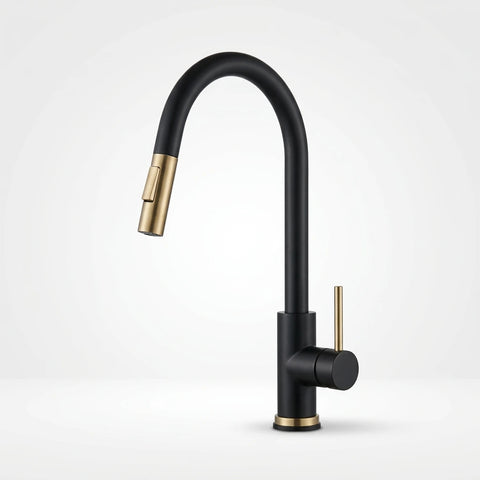 Albert Nordic Touch Sensor Pull-Down Single-Hole Kitchen Sink FaucetCHF 200.00
 Michael Spring Spout Pull-Down Single-Hole Kitchen Sink FaucetCHF 165.00
 Johannes Swivel Spout Pull-Down Single-Hole Kitchen Sink FaucetCHF 184.00
 Edison Single-Hole Retractable Folding Kitchen Sink FaucetCHF 161.00
 Abraham Pull-Down Spring Spout Dual Handle Kitchen Sink Faucet With FilterCHF 220.00
 Neil Pull-Down Springs Spout Kitchen Sink FaucetCHF 175.00


